| Sheet Harbour was well suited for lumbering with its plentiful timber resources, rivers for the transport of logs and power for saw mills, and a port from where exported timber could be loaded onto waiting ships en route to various markets. And from the arrival of the first settlers in 1784, lumber was needed to build homes, fuel fires, and to construct boats for fishing and shipping supplies along the coast to and from Halifax.
The first sawmill was constructed by Thomas Lydiard on land owned by John Greer of Allenwick Manor, West River. Another sawmill was built two years later, most likely the result of a government grant. In an attempt to encourage the lumber industry, the Nova Scotia Government had granted bounties for each sawmill built during the period 1786-87, and as a result, they were being constructed throughout the province, with Sheet Harbour being no exception.
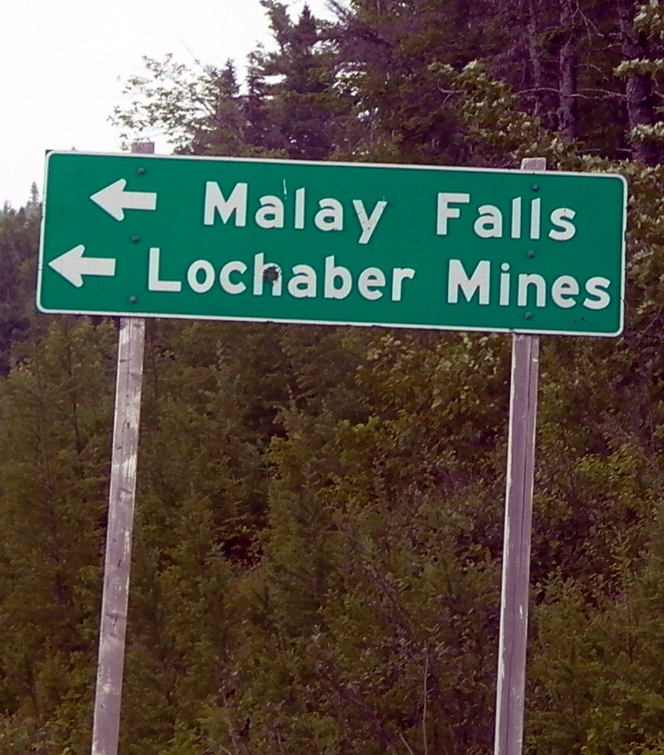
By 1825, the local lumber industry was a prosperous one with a series of West River mills. James Fraser had built one at Upper Lochaber, John Hall erected his mill at the head of the river’s falls in 1830, and in 1838, Jonathan Archibald constructed his facility which was followed by yet another, built by Daniel Wright, in 1845.
One of the first major sawmill operations in the area was that of Halifax’s George A. Starr, erected on the West River in 1858. It specialized in the processing of pine lumber and was also an exporting business. The mill, water powered and with a gang saw, burned down but was rebuilt in 1880 by Havelock McC. Hart, who sold the lands and mill to Rhodes and Curry of Amherst in 1902. Under them, the mill would become the Sheet Harbour Lumber Company, which would again change hands in 1922 when it was sold to the American Perforated Wrapping Paper Company of Albany, New York, and later yet, to Scott Paper.
Peggy’s Cove is located on Nova Scotia’s south shore, only fifty kilometres from Halifax, the provincial capital. Facing the ocean, the Cove is actually on the eastern side of St. Margaret’s Bay, a large expanse of water fringed by a number of towns and fishing villages, very popular with summer visitors. This community is built on the rocky hills that surround the small cove. The channel entrance, extremely narrow, has a reputation for intimidating the faint of heart, but affords good protection from the wild storms of the North Atlantic.
Old boat nearby the docksThe origins of the village name seem lost in antiquity, the mundane explanation being that it’s an abbreviation of “Margaret”, and this is the first cove off the Bay. A more romantic version describes the rescue of a sole survivor of a shipwreck, a damsel named “Peggy”, who washed up on the rocks during a hurricane, and stayed to marry a local bachelor.
Most of the population of Peggy’s Cove, about fifty souls, make their living from fishing or tourism, and the Cove has been a fishing village since it’s founding in 1811. The mackerel catch and lobstering provide most of the income. The traps, anchors, and nets, stored on fish stages and the government wharf, are not tourism props, but essential fishing gear used by locals to earn a livelihood.
Peggy’s Cove, well known to artists and photographers, has been famous for its unspoiled beauty for years. Sherman Hines, well-known Canadian photographer, still tells the story of how he was almost washed into the sea here by a rogue wave, while making images on the rocks near the lighthouse.
Today, Peggy’s Cove represents a tasteful compromise between tourism and fishing. Motor vehicles and buses may be parked in two huge lots, and do not clog the roads. A large, family-owned restaurant and gift shop, “The Sou’Wester”, can handle a surprisingly large percentage of the crowds that gather here. There are whale- and puffin-watching tours (growing up in Halifax, I don’t recall ever hearing of offshore whales!), and several art studios and galleries. The locals remain cheerful and patient, despite the annual inundation of their little world, by hordes of visitors.
The primary attraction of Peggy’s Cove, however, is its natural beauty. In the village itself, the white lighthouse, set upon huge granite rocks that line the shore, stands as a sentinel above the blue seas. Built in 1916 to replace and older structure, it now houses the only Canadian post office to be located in a lighthouse. Peggy’s Cove has been given its own stamp cancellation, a replica of the lighthouse.
The harbour itself is a scenic place, with colourful boats at the wharves, grey wooden fish houses and sheds surrounded by brightly-painted markers and floats, and ever-present clouds of herring gulls. The small wooden village church glows in the westering sun, while the dark blue sea offsets the white houses that perch on the hills.
One of the most interesting aspects of the Cove is the local geology. A large number of huge boulders, scattered at random, cover the hills in the immediate vicinity of the village, making this area unique. The boulders are 415 million years old Devonian granite, deposited by the last of the retreating glaciers.
To be able to photograph the lighthouse and surrounding rocks without including hordes of people, Allison and I are up at dawn. This is a memorable experience, to be out on these rocks alone.
The low light of the rising sun is fluorescent on the lighthouse, making it a striking sight against the blue sky. The rocks reveal a variety of subdued colours, while the variety of shapes and shadows invite studies of the abstract. we spend several delightful hours exploring the area with camera and sketchpad, before retreating from the cold wind.
Settled almost 250 years ago, many North Americans can trace their roots back to the historic town of Mahone Bay. There’s nothing typical about the town of Mahone Bay (pop. 1,096). The view will make you want to stop, park your car and stroll along the waterfront. The narrow streets are lined with a unique collection of studios and galleries of some of Canada’s finest artists and craftspeople, specialty and general-needs shops, a pub, restaurants and cafes and a visitor information centre. Make sure you stop at the Settlers Museum. And keep your head up, the architecture in Mahone Bay is marvellous. The three waterfront churches form one of the most photographed scenes in Nova Scotia. Outdoor enthusiasts can experience the area through sailing or kayaking. At the end of July, the town’s annual Wooden Boat Festival celebrates Mahone Bay’s heritage of shipbuilding and sailing vessels.
The name of the shiretown and the county. Off Highway 103. First designated as Port Forchu or Forked Harbour (a translation of the Mi’kmaq Maligeak by Samuel de Champlain, the new name was transferred from Yarmouth, Massachusetts, by New England Planters and fishermen. It appears first in the document “A Grant for a Township at Cape Forchu called Yarmouth (1 September 1759)”.
For many years, Yarmouth was the major ship building centre of Nova Scotia. By the 1870s Yarmouth reached its pinnacle of fame and possessed more tonnage per capita than any other seaport in the world. All of this was swept aside by the advent of steam and the consequent decline of Golden Age of Sail. Evidence of the prosperity of this bygone era may be found in the surviving domestic architecture of Yarmouth town and county. In addition, the Yarmouth County Museum depicts much of this history through displays of ship portraits, models, archives, and other artifacts. Yarmouth is also home to the Firefighters Museum of Nova Scotia, which houses a rare collection of early equipment and memorabilia.
Incorporation of the town took place in 1890. It is the terminus for ferry service across the Gulf of Maine to Bar Harbour and Portland.
The county, taking its name from the original township of 1759, was established by statute in 1836. According to this legislation, it was “to contain, comprise, and comprehend the two townships of Yarmouth and Argyle..”. |