June 2004 England With Brittany
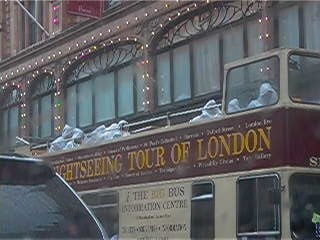
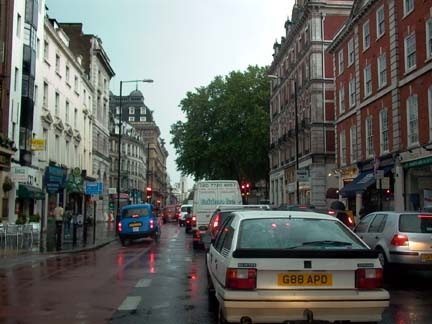
We arrived at Heathrow at 6:30am London time (1:30am East Coast and 11:30pm West Coast) so our body clocks were really all fouled up. It took us a couple of hours to make our way through Customs and Claim our luggage and then make our way via train to the Holborn Station which was only a short walk from the Cosmos House Bed and Breakfast. The hotel was ok. Not one of the best but as we weren’t in it much it really didn’t matter. Once we were able to get into the room Brittany napped for a couple of hours while Mike and I did a short tour of the area. Once we got Brittany up for supper we made a quick stop at the British Museum knowing we would be back to spend more time there.
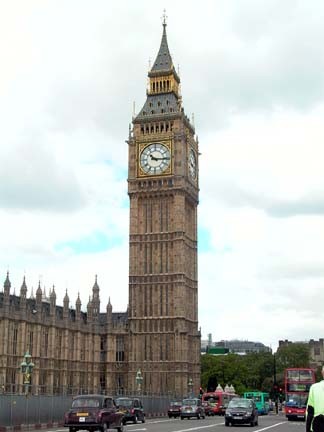
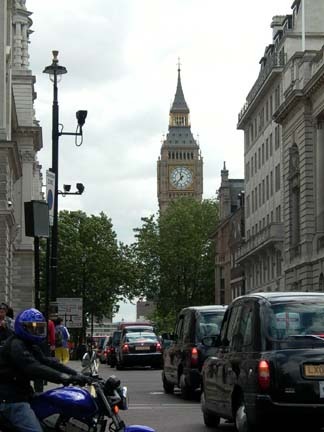
On Thursday morning we were off to see Big Ben (we literally came out of the subway station right at the foot of Big Ben). It took me a few minutes to get my bearings and figure out where we needed to go from there after taking lots of pictures. Our first lengthy stop was at Westminster Abbey. Brittany did very well at reading the old English and I managed some of the Latin. She enjoyed her time there and tried very hard not to step on the grave markers embedded in the floor.
The English monarch, Edward the Confessor, first built Westminster Abbey. The church was consecrated on December 28, 1065. Small portions of the current building date back to the first structure of the eleventh century, although a majority of the current structure was built between the thirteenth and sixteenth centuries.
In the middle of the thirteenth century, King Henry III started the present-day structure. The king’s architect, Henry de Reyns, constructed it in a new design. The Abbey’s architecture will be discussed more thoroughly in the Art and Architecture section. Westminster Abbey was designed to be a great place of worship, but also as a place for the coronation and burials of monarchs. Henry III definitely achieved his goal. Westminster Abbey has been the site for every coronation, with the exceptions of only Edward V and Edward VIII. It all started with the coronation of William the Conqueror on Christmas day, 1066. Seventeen British monarchs are buried in Westminster Abbey, and a total of over three thousand people are either buried or memorialized there. More on these memorials will be discussed in the Tour section.
Westminster Abbey is the unofficial church of court and Parliament, and no other church in Britain has been so closely connected with the nation’s history. The Abbey even served as a meeting place of early parliaments. There is indeed a tremendous amount of history found within the walls of Westminster Abbey. It celebrated its 900th anniversary in 1965-66. The Abbey continues to be a place of worship and a host for significant events of the nation. Perhaps most significant in recent years is the funeral service of Princess Diana, which took place less than one year after my visit to London.
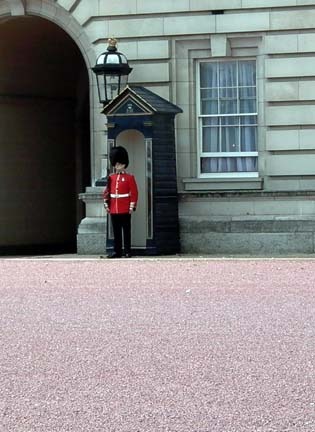
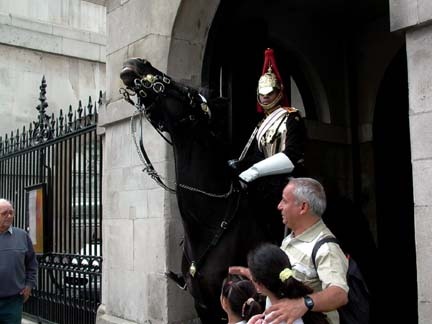
From Westminster Abbey we walked through St. James Park up to Buckingham Palace were the cameras clicked away again and we saw a “small” changing of the guard. It was not ceremonial – just a basic changing. The Mall had been closed due to the coming Olympic Torch Ceremony so we missed the changing of the guard once again.
From there we walked up to Harrods were we managed to find baby clothes for Samantha and hats for Brittany, Claire, Eliza, and Gabe before heading for the cafe for scones and a snack. Here Brittany got her first taste of real scones with clotted cream and jam. She was hooked. No Starbucks Scones for her!
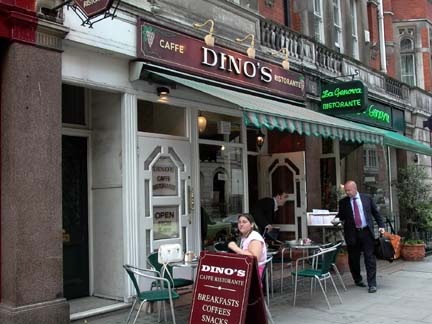
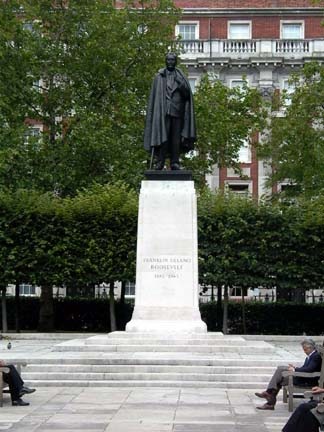
Friday we met my friend Maurene at a small Italian Restaurant called Dinos (33, North Audley Street London) near Grosvenor Square and just across from the American Embassy. Maurene and I caught up on lots of things that hadn’t made it into our emails (we met in the train station on our way to the Docklands area when Mike and I were last in London about 18 months ago) and we brought Brittany into the conversation as much as possible. After a great lunch we went into the Square and took some pictures with Maurene and as she headed back to work we got pictures to the statues of Franklin D Roosevelt and Dwight D Eisenhower along with a Memorial to 9/11. From there Brittany and I hit Selfridges and she found the erasers she needed and we picked up some hot chocolate for our breakfasts.
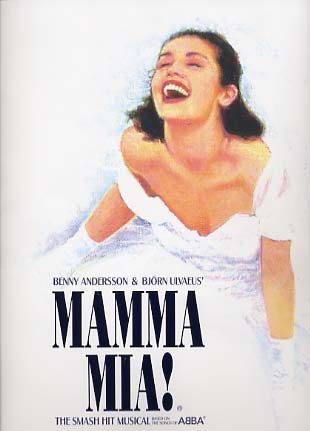
Saturday was a leisurely morning and then we got ready to go to Picadilly Circus and the Prince of Wales Theatre to see Mamma Mia. After the overture started, Brittany realized she knew these ABBA songs from so long ago as they were on a CD by one of her teen groups. She laughed and sang along during the play and we finished up the evening with sushi.
Sunday we awoke to bright sunshine though cool temperatures and headed for the Victoria Coach Station where we picked up our rental car for our journey down to Stonehenge. We had an “infant Benz” and it was Brittany’s first experience at travel on the wrong side of the road. We made great time on the motorway until we hit a detour that took us out of our way but gave Brittany a view of the English countryside. We finally arrived at Stonehenge and got in to see the stones once again.
Stonehenge is surely Britain’s greatest national icon, symbolizing mystery, power and endurance. Its original purpose is unclear to us, but some have speculated that it was a temple made for the worship of ancient earth deities. It has been called an astronomical observatory for marking significant events on the prehistoric calendar. Others claim that it was a sacred site for the burial of high-ranking citizens from the societies of long ago.
While we can’t say with any degree of certainty what it was for, we can say that it wasn’t constructed for any casual purpose. Only something very important to the ancients would have been worth the effort and investment that it took to construct Stonehenge.
The stones we see today represent Stonehenge in ruin. Many of the original stones have fallen or been removed by previous generations for home construction or road repair. There has been serious damage to some of the smaller bluestones resulting from close visitor contact (prohibited since 1978) and the prehistoric carvings on the larger sarsen stones show signs of significant wear.
Construction of the Henge
In its day, the construction of Stonehenge was an impressive engineering feat, requiring commitment, time and vast amounts of manual labor. In its first phase, Stonehenge was a large earthwork; a bank and ditch arrangement called a henge, constructed approximately 5,000 years ago. It is believed that the ditch was dug with tools made from the antlers of red deer and, possibly, wood. The underlying chalk was loosened with picks and shoveled with the shoulderblades of cattle. It was then loaded into baskets and carried away. Modern experiments have shown that these tools were more than equal to the great task of earth digging and moving.The Bluestones
About 2,000 BC, the first stone circle (which is now the inner circle), comprised of small bluestones, was set up, but abandoned before completion. The stones used in that first circle are believed to be from the Prescelly Mountains, located roughly 240 miles away, at the southwestern tip of Wales. The bluestones weigh up to 4 tons each and about 80 stones were used, in all. Given the distance they had to travel, this presented quite a transportation problem.Modern theories speculate that the stones were dragged by roller and sledge from the inland mountains to the headwaters of Milford Haven. There they were loaded onto rafts, barges or boats and sailed along the south coast of Wales, then up the Rivers Avon and Frome to a point near present-day Frome in Somerset. From this point, so the theory goes, the stones were hauled overland, again, to a place near Warminster in Wiltshire, approximately 6 miles away. From there, it’s back into the pool for a slow float down the River Wylye to Salisbury, then up the Salisbury Avon to West Amesbury, leaving only a short 2 mile drag from West Amesbury to the Stonehenge site.
Construction of the Outer Ring
The giant sarsen stones (which form the outer circle), weigh as much as 50 tons each. To transport them from the Marlborough Downs, roughly 20 miles to the north, is a problem of even greater magnitude than that of moving the bluestones. Most of the way, the going is relatively easy, but at the steepest part of the route, at Redhorn Hill, modern work studies estimate that at least 600 men would have been needed just to get each stone past this obstacle.Once on site, a sarsen stone was prepared to accommodate stone lintels along its top surface. It was then dragged until the end was over the opening of the hole. Great levers were inserted under the stone and it was raised until gravity made it slide into the hole. At this point, the stone stood on about a 30° angle from the ground. Ropes were attached to the top and teams of men pulled from the other side to raise it into the full upright position. It was secured by filling the hole at its base with small, round packing stones. At this point, the lintels were lowered into place and secured vertically by mortice and tenon joints and horizontally by tongue and groove joints. Stonehenge was probably finally completed around 1500 BC.
Who Built Stonehenge?
The question of who built Stonehenge is largely unanswered, even today. The monument’s construction has been attributed to many ancient peoples throughout the years, but the most captivating and enduring attribution has been to the Druids. This erroneous connection was first made around 3 centuries ago by the antiquary, John Aubrey. Julius Caesar and other Roman writers told of a Celtic priesthood who flourished around the time of their first conquest (55 BC). By this time, though, the stones had been standing for 2,000 years, and were, perhaps, already in a ruined condition. Besides, the Druids worshipped in forest temples and had no need for stone structures.The best guess seems to be that the Stonehenge site was begun by the people of the late Neolithic period (around 3000 BC) and carried forward by people from a new economy which was arising at this time. These “new” people, called Beaker Folk because of their use of pottery drinking vessels, began to use metal implements and to live in a more communal fashion than their ancestors. Some think that they may have been immigrants from the continent, but that contention is not supported by archaeological evidence. It is likely that they were indigenous people doing the same old things in new ways.
As Legend Has It
The legend of King Arthur provides another story of the construction of Stonehenge. It is told by the twelfth century writer, Geoffrey of Monmouth, in his History of the Kings of Britain that Merlin brought the stones to the Salisbury Plain from Ireland. Sometime in the fifth century, there had been a massacre of 300 British noblemen by the treacherous Saxon leader, Hengest. Geoffrey tells us that the high king, Aurelius Ambrosius, wanted to create a fitting memorial to the slain men. Merlin suggested an expedition to Ireland for the purpose of transplanting the Giant’s Ring stone circle to Britain. According to Geoffrey of Monmouth, the stones of the Giant’s Ring were originally brought from Africa to Ireland by giants (who else but giants could handle the job?). The stones were located on “Mount Killaraus” and were used as a site for performing rituals and for healing. Led by King Uther and Merlin, the expedition arrived at the spot in Ireland. The Britons, none of whom were giants, apparently, were unsuccessful in their attempts to move the great stones. At this point, Merlin realized that only his magic arts would turn the trick. So, they were dismantled and shipped back to Britain where they were set up (see illus. at right) as they had been before, in a great circle, around the mass grave of the murdered noblemen. The story goes on to tell that Aurelius, Uther and Arthur’s successor, Constantine were also buried there in their time*.Present Day Stonehenge
Situated in a vast plain, surrounded by hundreds of round barrows, or burial mounds, the Stonehenge site is truly impressive, and all the more so, the closer you approach. It is a place where much human effort was expended for a purpose we can only guess at. Some people see it as a place steeped in magic and mystery, some as a place where their imaginations of the past can be fired and others hold it to be a sacred place. But whatever viewpoint is brought to it and whatever its original purpose was, it should be treated as the ancients treated it, as a place of honor .The modern age has not been altogether kind to Stonehenge, despite the lip service it pays to the preservation of heritage sites. There is a major highway running no more than 100 yards away from the stones, and a commercial circus has sprung up around it, complete with parking lots, gift shops and ice cream stands. The organization, English Heritage, is committed to righting these wrongs, and in the coming years, we may get to see Stonehenge in the setting for which it was originally created. Despite all its dilapidation and the encroachment of the modern world, Stonehenge, today, is an awe-inspiring sight
After touring Stonehenge and making a brief visit to the gift shop we headed out towards Windsor by way of back country roads. Brittany found out what a hedgerow was and saw how narrow some of those roads really are. We stopped at a small village inn and had wonderful roast beef sandwhiches (cut just off the beef) and homemade buns. The lunch was wonderful.
We finally ended up in Windsor which is the summer home to the Royal Family. We found that our favorite tea shop had been turned into a Chinese Restaurant but there were no shortage of others to choose from. Brittany and I quickly ordered the scones with hot chocolate and enjoyed some homemade ones this time around.
To residents and visitors alike, Windsor epitomises English history: the world-famous castle, the river with all the traditional trappings and the forest that is now known as Windsor Great Park.
Windsor started life as a small Saxon town. All that changed when William the Conqueror decided to build a castle, two miles from the original town, so creating “New Windsor”.
Although the two parts are now more or less merged, Old Windsor still exists as a recognisable area. The castle tells not just its own story, but that of the town. Nearly every defining event in Windsor’s history is entwined with its royal home. The Domesday Book notes that Windsor was the third largest settlement in Berkshire, with nearly five hundred inhabitants.
After our enjoyable afternoon snack, we toured the older section of Windsor and suddenly got caught it a real downpour. We slowly made our way back to the car in the carpark between the rain drops. It rained all the way back into downtown London and as we made our way to the train station and back to the Hotel. We were pretty wet as we finally got back to our hotel but enjoyed a tremendous day.
Monday we started off with the British Museum and Brittany learned about the Rosetta Stone and other historical items held by the Museum.
The Rosetta Stone, carved in 196BC was found in 1799 by a French officer, Pierre-Francois Bouchard, in the village of Rosette (Raschid), in the western Nile delta. It is carved from black basalt and measures 114cm x 72cm x 28cm. It is written in three scripts: hieroglyphics were used for official and religious documents, Demotic was the common script, and Greek was the language of the Ptolemic pharaohs. (If you ask Brittany she can tell you the three languages) Jean-Francois Champollion (1790-1832) was the first to decode the writings. He is said to have learnt Greek and Latin by the time he was nine. He studied Persian, Ethiopic, Sanskrit, Pahlevi and Arabic. Hieroglyphsš can be written left to right and right to left. You can tell which way to read because people and animals always face the start of the line. The text, carved in Egypt, carries a decree issued by the priests of Memphis on 27 March 196BC that the pharaoh should be worshipped as a god in recognition of his “establishing Egypt and making it perfect.” Furthermore, the hieroglyph version of the Rosetta text reads, temples were directed to display the decree “on a stela of hard stone in the script of god’s words [hieroglyphs], the script of documents [the cursive Demotic script of then ‘modern’ Egyptian] and the letters of the Aegeans”, creating the trinity of the Stone that made its fame.
Yet the power struggle that had led to the decree was a sign that the great ancient civilisation was entering its final phase and soon no one could read its words. But in the muddy delta of the Nile a sturdy rock was a rare and useful item, so it was recycled as a building block, its distinct shape created by a careless builder. Eventually it came to be used in the construction of a 15th-century fortress by the latest foreign, Mamluk, ruler of Egypt.
That fort was already in ruins when Napoleon invaded Egypt, says Dr Parkinson, to “colonise, in the name of the Enlightenment, a country that was supposedly the origin of all wisdom”.
One attractive characteristic of the Enlightenment was its thirst for knowledge, however, and the savants who had come with Napoleon were looking for a magic door into Egyptian culture. When the Stone was uncovered it was immediately recognised as such. But the French were not to keep their prize, and with the victory of the British army it was despatched to London.
We then continued through the ancient world galleries, covering Egypt, Greece and the Near East, that fill the west wing. We also saw the donated costumes used in the movie Troy. (Big hit with Brittany … the costume worn by Brad Pitt in the movie).
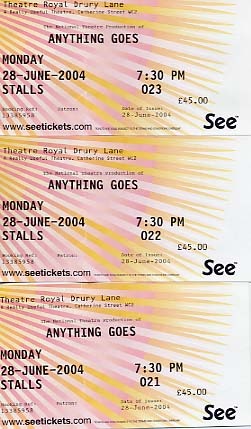
Monday afternoon we did some roaming around Covent Gardens where we enjoyed good food, lots of shops and wandering musicians. It was and still is a market place with lots of offer. While wandering about the area which also included Drury Lane we came across the play “Anything Goes” and managed to get last minute tickets for that night. What a stretch for Brittany music wise … from ABBA in our time frame back to Cole Porter in her Great Grandmother’s time frame! They had the top of a ship that revolved as part of the set and Brittany enjoyed it greatly .. especially the lead actor looking like Tom Cruise. At the start of the second act the rotating deck stopped rotating and they had to delay the play a bit but were soon back on track. Finally we were back to the hotel late in order to get ready for our trip back to New Hampshire and ultimately back to San Diego.
Tuesday we were back at Heathrow (an hour in line to get tickets but little time through security) and then back in New Hampshire where my brother picked us up and they made us a great dinner. Wednesday we were back on planes, AGAIN, and this time home to San Diego. I promised Brittany that once we hit San Diego I wouldn’t wake her up again until July 4th!